

Why Choose Us For PRK
Dr. Jani has been consistently recognized as a Top Doctor in Ophthalmology, Laser Vision Correction, and Cataract Surgery. These honors reflect his commitment to excellence and his proven ability to deliver outstanding results. Patients trust him to provide safe, effective care, even for the most delicate procedures. Awards like these are earned through years of dedication and patient confidence, which is why so many people continue to choose Vista Eye Specialists for their vision needs.
Table of Contents
PRK Overview
Photorefractive keratectomy, commonly known as PRK, was the first laser refractive surgery approved by the FDA and has been performed for over three decades. During PRK, our top-rated eye surgeon, Dr. Binoy R. Jani, reshapes the outer surface of the cornea with a specialized laser, which is an ultraviolet light beam used to precisely remove tissue. By resculpting the corneal tissue, light focuses better into the eye, resulting in clearer vision.
Read More Information about PRK
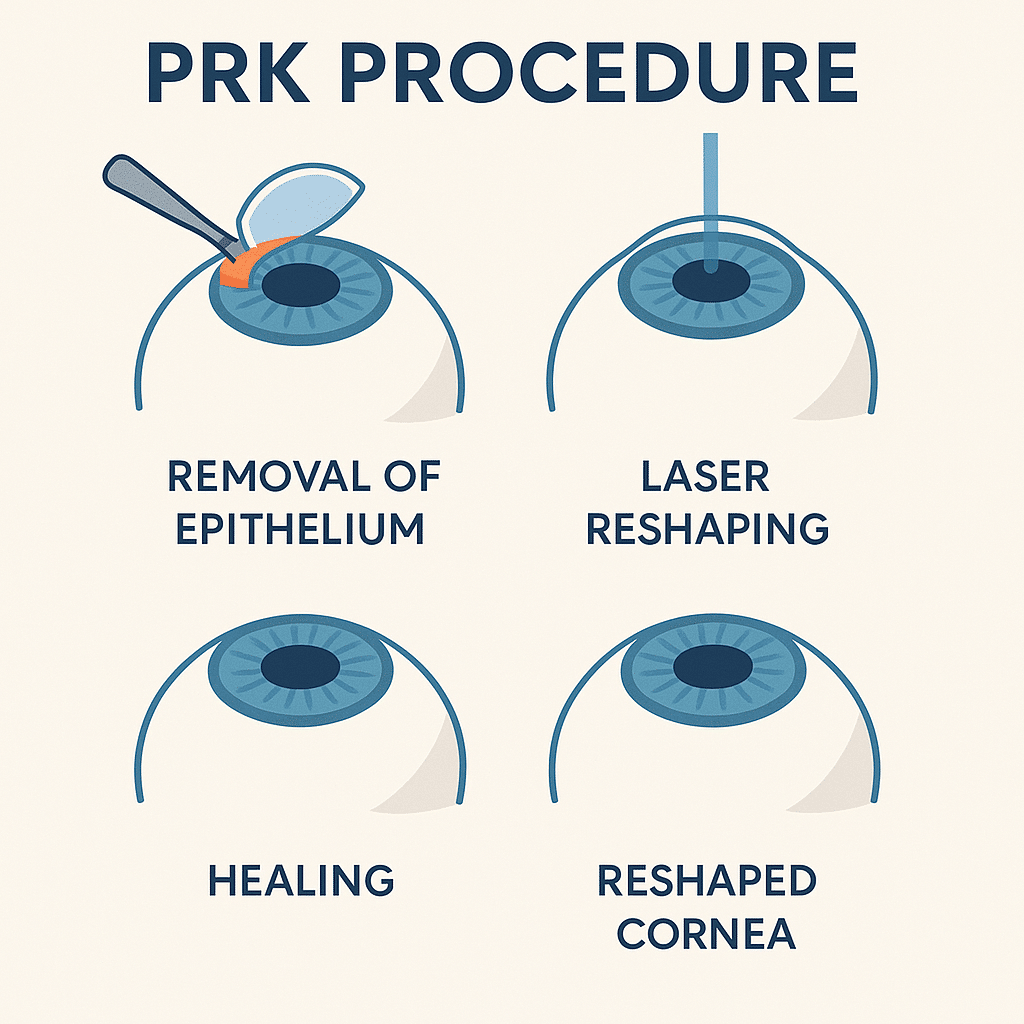
Modern excimer lasers can also correct astigmatism by reshaping the cornea into a more regular, rounded form. Unlike LASIK, PRK does not involve creating a corneal flap before the laser treatment; instead, the outer layer of the cornea is gently removed, and the surface is sculpted directly. Because no flap is made, PRK tends to cause fewer issues with dry eye during recovery. However, vision improvement occurs gradually, which ranges from a few days to several months. Surgeons often recommend PRK for patients with thin corneas or those who experience moderate dry eye symptoms.
Thinking about PRK? Here’s what you need to know.
Photorefractive Keratectomy, better known as PRK, was the first laser vision correction procedure approved by the FDA, and it has been trusted for over 30 years.
During PRK, Dr. Binoy R. Jani gently reshapes the surface of your cornea using a cool ultraviolet laser. This precise process removes tiny amounts of tissue to help light focus properly in your eye, giving you clearer vision without glasses or contacts.PRK is a great option for people who want lasting vision correction but may not be ideal candidates for LASIK.
Recovery takes a little longer than LASIK, but the results are just as life-changing.
After Your PRK Procedure
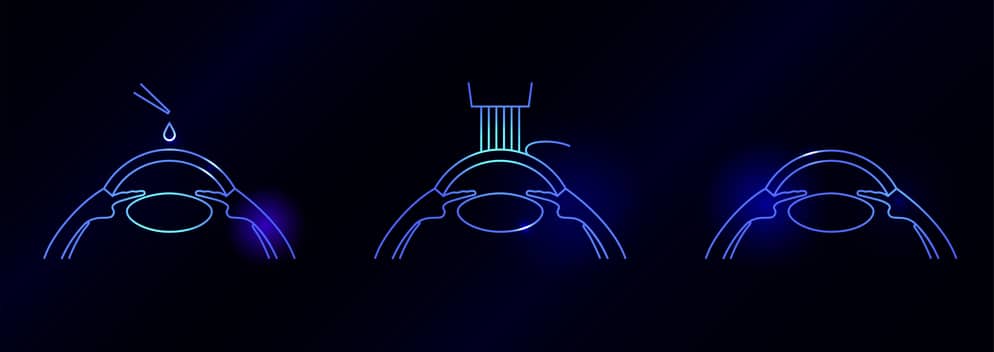
It is normal to feel some discomfort after PRK. To help your eyes heal, a soft contact lens will be placed after the procedure, and you will use antibiotic eye drops as directed. You can also use over-the-counter pain relievers and apply cold compresses to ease any discomfort. Please avoid wearing makeup or using lotions around your eyes until the contact lens is removed.
During a comprehensive eye examination, Dr. Jani will determine whether PRK is right for you. Some of the qualities that make a good candidate for PRK include:
- Adequate corneal thickness
- A stable eye prescription for at least 12 months
- Good physical and ocular health
- Realistic expectations regarding results of laser vision correction
- Understand the risks and benefits of PRK
- Not a good candidate for LASIK
Frequently Asked Questions (FAQs) About PRK
PRK recovery takes longer than LASIK because it removes the cornea’s outer layer. The surface usually takes about four or five days to heal, and vision improves over several weeks. You’ll wear a “bandage” lens to protect your eye for up to a week after PRK surgery. Dr. Jani removes the lens during your follow-up visit. Most people see functional improvement within a week or two, but vision can take up to 3 months to fully stabilize. LASIK patients typically return to regular activities the next day, but PRK patients often need a few extra days off work. While the recovery is slower, the final visual results are similar.
PRK may be a better choice if you:
- Have thinner corneas
- Are at higher risk of eye trauma (military, contact sports, etc.)
- Have corneal irregularities
- Are not eligible for LASIK for these or other reasons
PRK removes less tissue, so it’s often a good option for people who wouldn’t qualify for LASIK. Dr. Jani evaluates your eye health and lifestyle before making a recommendation.
Yes, PRK and LASIK offer similar improvements in vision, both offering dramatic improvements.
PRK permanently reshapes the cornea to correct refractive errors. However, it’s normal to experience reduced near vision focus (presbyopia) as you age, so you may need reading glasses starting sometime around age 40. If you develop cataracts, a common problem in many people in their 60s and older, you may need cataract surgery to replace a clouded eye lens with a clear intraocular lens (IOL) later in life. However, after cataract surgery, you won’t need further vision correction procedures.
During the first few days, your eyes may feel sore, gritty, or light-sensitive. You’ll wear a bandage contact lens to protect the healing surface. Most patients are advised to avoid:
- Driving for several days
- Eye makeup for at least a week
- Heavy exercise or swimming for a week or more
- Rubbing or touching the eyes
You’ll also use prescription antibiotic drops to prevent infection and reduce inflammation. Most people return to work within a week.
With PRK, Dr. Jani uses an excimer laser to reshape the curvature of your cornea:
- For nearsightedness (myopia), the laser flattens the cornea
- For astigmatism, it smooths out irregular parts of the cornea for more even focus
- For farsightedness (hyperopia), it steepens the cornea’s center
This correction allows light to focus more precisely on your retina, which improves vision.
Wondering if PRK is Right for You?
We offer consultations at our Fredericksburg, VA office. Call us at 888-393-5264 to schedule your appointment and learn more about your options for achieving visual freedom.