

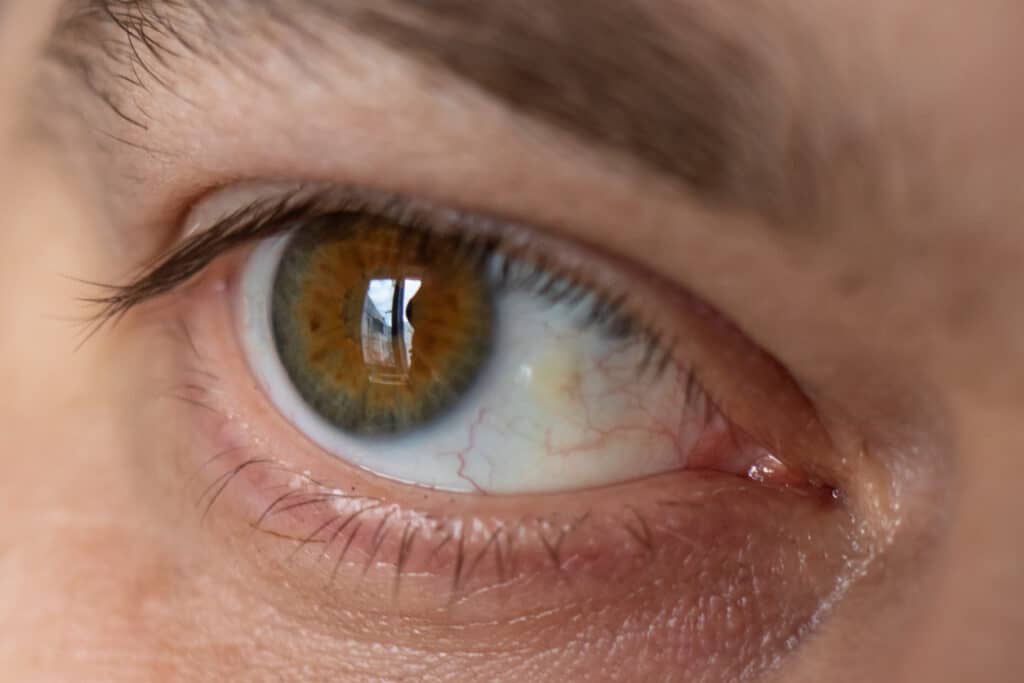
Noticing a new bump, raised area, or unusual tissue on the white of your eye can understandably get your attention. Two possible causes are a pterygium and a pinguecula. Although these conditions have similarities and both involve changes to the conjunctiva, they differ in appearance, location, and how they may affect your vision.
At Vista Eye Specialists in Fredericksburg and Culpeper, VA, board-certified ophthalmologist and cornea specialist Binoy R. Jani, MD, provides highly personalized care for conditions affecting the cornea and ocular surface. Understanding the difference between a pterygium and pinguecula can help you know when an eye examination is appropriate.
What Is a Pinguecula?
A pinguecula is a small, raised growth on the conjunctiva, the clear tissue covering the white part of your eye. It often looks yellowish and typically develops on the side of the eye closest to the nose, although it can occur elsewhere.
Exposure to ultraviolet (UV) light is associated with pingueculae, as are environmental factors such as wind, dust, and dry conditions. A pinguecula may not cause noticeable symptoms. When irritation occurs, you might experience redness, dryness, inflammation, or the sensation that something is in your eye.
Importantly, a pinguecula remains on the conjunctiva and does not grow onto the cornea.
How Is a Pterygium Different?
A pterygium is also a growth of conjunctival tissue, but unlike a pinguecula, it can extend onto the cornea. It is sometimes called “surfer’s eye” because long-term UV exposure is an important risk factor.
A pterygium is generally wedge- or wing-shaped. You may experience redness, irritation, dryness, or a foreign-body sensation. If the growth becomes large enough or changes the shape of your cornea, it can cause astigmatism or interfere with vision.
This potential corneal involvement is one of the most important differences between the two conditions.
Do Pterygium and Pinguecula Require Treatment?
Treatment depends on your symptoms and the growth’s characteristics. Mild irritation may sometimes be managed with lubricating eye drops or other treatments recommended by your eye doctor.
A pterygium requires closer attention if it is growing, causing persistent discomfort, affecting the cornea, or threatening your vision. In some cases, your eye doctor may recommend surgical removal. An eye examination is important because other eye conditions can cause growths, redness, or changes that may initially look similar.
Protecting your eyes from UV exposure with quality sunglasses and wearing appropriate eye protection in dusty or windy environments may also help reduce irritation and exposure to contributing environmental factors.
Have an Eye Growth Properly Evaluated
You should not have to determine on your own whether a visible change is a pterygium, pinguecula, or something else. An examination can establish the diagnosis and determine whether monitoring or treatment is appropriate.
At Vista Eye Specialists, Dr. Binoy R. Jani brings fellowship training in cornea and external disease to diagnosing and treating eye conditions. If you have noticed a growth or persistent irritation, schedule an evaluation at our Fredericksburg or Culpeper, VA office by calling 540-208-5827.