

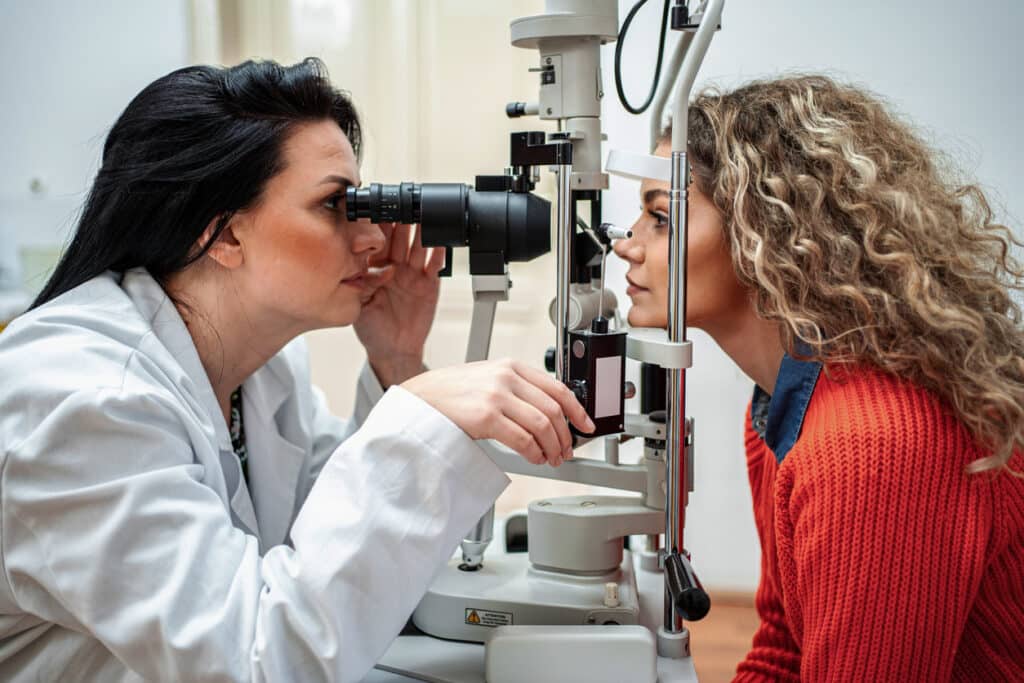
If you had LASIK or PRK earlier in life, you can usually still have cataract surgery when a cloudy lens begins interfering with your sight. Your earlier procedure does matter, however, because it reshaped the cornea and may affect how your replacement lens is selected. At Vista Eye Specialists, in Fredericksburg, Virginia, Dr. Binoy R. Jani is a board-certified ophthalmologist and cornea specialist with fellowship training in refractive surgery, cornea, and external disease.
Why Earlier Laser Vision Correction Matters
LASIK and PRK correct refractive errors by changing the cornea’s shape. LASIK involves creating a thin corneal flap before reshaping the underlying tissue, while PRK vision correction treats the corneal surface without creating a flap. Those changes remain part of your eye’s history long after the initial procedure.
During cataract surgery, the cloudy natural lens is removed and replaced with an intraocular lens, or IOL. Selecting the proper IOL power depends partly on corneal measurements. Because previous LASIK surgery changes those readings, your surgeon may use additional testing and calculation methods rather than relying only on standard formulas. This does not make cataract surgery unsafe or impossible. It simply calls for a more detailed preoperative evaluation.
What Should You Bring to Your Evaluation?
Tell your eye surgeon about any refractive procedure you have had, even if it took place decades ago. Records that may be helpful include:
- Your prescription before LASIK or PRK
- Preoperative corneal measurements
- The amount of correction performed
- Your surgical or follow-up reports
How Is an IOL Chosen After LASIK or PRK?
The discussion about cataract lens options should include more than your test results. Your surgeon will also want to know how you use your vision throughout the day.
For example, do you spend long periods driving, reading, working at a computer, or switching among several distances? Would you be comfortable wearing reading glasses after surgery? These details help narrow down which lenses may suit your needs.
No IOL can guarantee that you will never need glasses again. Understanding what a lens can and cannot do helps you make a more informed decision and prevents unrealistic expectations.
Could the Light Adjustable Lens Be Considered?
The Light Adjustable Lens may be discussed with some people who previously had refractive surgery. Unlike an IOL with a fixed prescription, this lens can be adjusted after the eye has healed. That flexibility allows the prescription to be refined based on how you are seeing after surgery rather than relying entirely on preoperative estimates.
The lens is not appropriate for every patient. It also requires follow-up light treatments and consistent use of UV-protective glasses during the adjustment period. Your eye health, schedule, visual priorities, and ability to complete the process all matter when deciding whether it is a practical option.
Questions to Ask Before Cataract Surgery
During your consultation, consider asking:
- How has my earlier refractive surgery affected my corneal measurements?
- Which IOLs are reasonable choices for my eyes?
- What range of vision could each lens support?
- Might I still need glasses for certain tasks?
- Is an adjustable lens appropriate for me?
- Would my old eye records be useful?
Discuss Your Cataract Surgery Options
A history of refractive surgery should be part of the conversation, not a reason to avoid cataract treatment. To have your eyes evaluated by Vista Eye Specialists in Fredericksburg or Culpeper, VA, contact us or call 888-393-5264.